



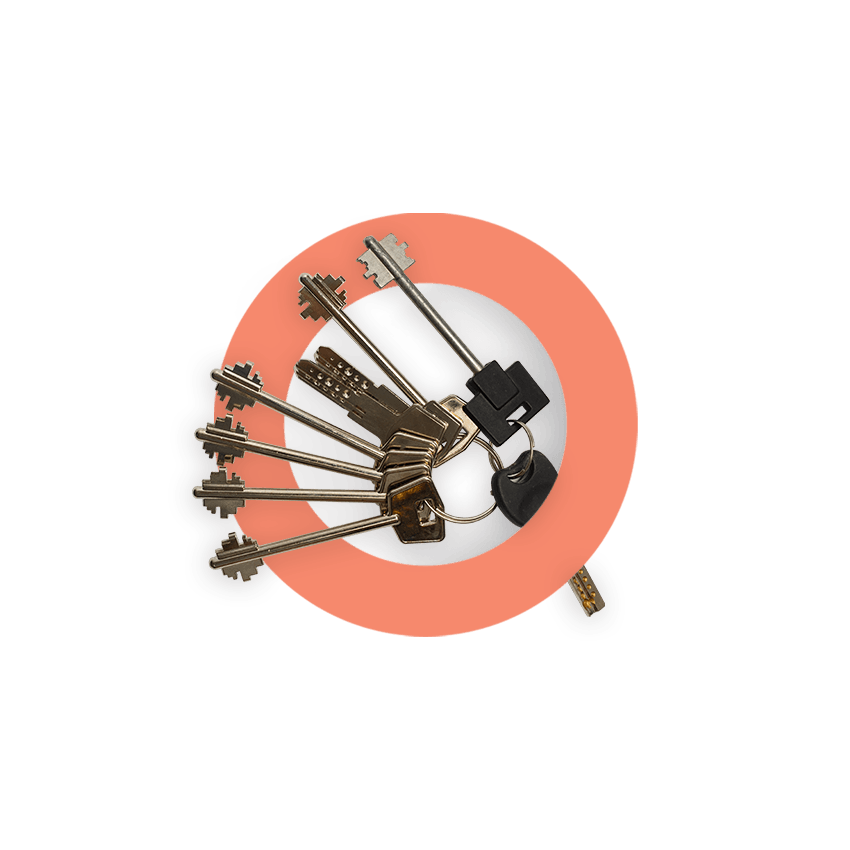
A business door can be slightly difficult for months before anyone decides to deal with it. Staff know which key works best. Someone pulls the door toward them before turning the lock. The person who opens in the morning has learned the routine, so the problem becomes part of the job.
That is usually fine until the person who knows the trick is away.
Rosewood Automotive Locksmith provides mobile commercial locksmith service for businesses around Mississauga. We help with everyday lock and key problems at offices, shops and other commercial properties. The work may involve a lock that has become difficult, old staff keys that should no longer work, or a door that is not closing the way it used to.
Tell us what the staff are dealing with before deciding what needs replacing. A key that turns badly all the time is different from a lock that only becomes difficult after the door closes. One points us toward the lock or key. The other may tell us to look at the door as well.
That distinction can save a perfectly usable lock from being replaced for the wrong reason.
This is one of the simpler reasons businesses call a locksmith.
An employee leaves. A manager changes. A key goes missing during a busy week and nobody knows where it ended up. The lock may still work perfectly, but the business no longer wants every old copy to work.
Rekeying may be an option when the existing lock is in good condition. The hardware stays on the door, while the old key stops operating it. New keys are used instead.
That can be useful for a small office where several people have held copies over the years. It can also make sense at a shop after a staffing change when replacing the entire lock would solve a problem the business does not actually have.
There are limits, of course. Rekeying does not repair damaged hardware. If the lock is loose, badly worn or already unreliable, keeping it just because it can technically be rekeyed may not be the best decision.
We would rather separate those two questions. First, is the hardware worth keeping? Second, who should have a key to it?
It sounds basic, but this is worth deciding before new keys are made.
Count the people who really need regular access. Think about who opens, who closes and whether a spare should be kept somewhere controlled. There is no benefit in making ten copies because ten copies were there before.
It is also worth keeping track of who receives them. A simple key list can save a lot of uncertainty six months later.
If one key is already difficult to use, keep it for the locksmith to see. A worn original and a newer copy can behave differently. That difference may help us understand whether the problem is in the key, the lock or both.
Commercial doors get used a lot. A front entrance may open hundreds of times in a week. Hinges move, doors settle and hardware wears. Small changes that would take years to notice at a rarely used home entrance can become obvious much sooner at a busy business.
One useful test is simple. Try the lock with the door open.
If the key turns normally, close the door and try again. If it suddenly becomes tight, the way the door sits in the frame deserves attention.
This does not prove the lock is fine, but it tells us not to ignore the rest of the door.
A shop owner may describe this as "the lock is getting worse". From their side, that makes perfect sense. The key is the thing in their hand. But if the bolt is rubbing against the strike every time the door closes, changing only the lock can leave the same daily fight in place.
We see similar problems with doors that need a hard pull before they latch. Staff adapt quickly. A new employee usually notices first because nobody has taught them the trick yet.
Those little habits are useful information. Mention them.
Taking over a shop or office raises many of the same key questions as moving into a home, only there may be more people involved.
You receive a handful of keys from the property manager or previous occupant. Maybe they are all accounted for. Maybe nobody knows how many copies were made over the years.
Before changing anything, check which locks belong to your unit and which are controlled by the building. Shared entrances, common areas and some managed-property hardware may not be yours to alter.
Get that answer first.
For locks that are under the business's control, we can look at the condition of the hardware and whether rekeying makes sense. A lock that works well may not need replacing just because the tenant changed. An old lock that is loose or damaged deserves a different conversation.
There may also be several doors with different needs. The customer entrance may be fine. The rear staff door may be worn. An office door may only need a key change.
There is no reason to force all of them into one package.
Check the door, the existing lock and any building requirements first.
A new lock has to fit the opening. The finish may matter on a customer-facing entrance. A property manager may have rules about what can be installed. If the door is part of a managed building, approval may be needed before hardware is changed.
Sorting that out before buying parts is much easier than discovering it after the new hardware is sitting on the counter.
If you already purchased something, keep the packaging and product details. We can look at what you have rather than assuming it will or will not work.
A home lockout may leave one person waiting outside. A commercial lockout can leave several employees standing at the door while the first customer is due in ten minutes.
That changes the pressure, but the useful information is still fairly simple.
Tell us which entrance is involved and who is authorized to approve access. If the business is inside a managed property, the landlord, property manager or building security may need to be involved.
Do not force a key that already feels wrong. A snapped key inside the lock gives everybody another problem to solve.
If another staff member has a working key, keep that key available. Comparing a good key with the problem key may be useful once we are there.
The same applies if the door has been difficult for weeks. A business lockout can be the final result of a problem that has been building slowly, not necessarily something that failed without warning.
You do not need a formal inspection to notice the obvious lock and key issues. A short walk through the property can tell you a lot.
This is also a good time to ask staff what they have noticed. The person who opens every morning may know about a problem the owner rarely sees. The closing staff may have a different issue with the same door at night.
That kind of everyday information is useful.
Mississauga businesses come in all shapes and sizes. A street-level shop in Port Credit has different access needs from an office near Square One. Cooksville has its own mix of small businesses and managed commercial properties. In larger buildings, simply reaching the correct entrance can need a little more information.
If you are looking for a local locksmith, Rosewood Automotive Locksmith provides mobile service around Lakeview, Port Credit, Cooksville, Mineola, Applewood and other parts of Mississauga.
For a commercial visit, give the business name, address and the entrance that needs work. Mention any parking or building-access instructions that would help someone reach the correct door. If the property is managed, have the authorized contact available where possible.
Keep the keys involved in the problem, including the ones that work badly. A photo can help with an enquiry, but leave the hardware installed unless there is a good reason not to.
Before the job is finished, try the lock yourself. Use the new keys. Close the door and check it again. If several copies were made, test more than one.
And if the whole problem can be described as "everyone here knows how to jiggle this door except the new guy", that is useful too.
We know where to start.